
Albany Biocultural Diversity Forest
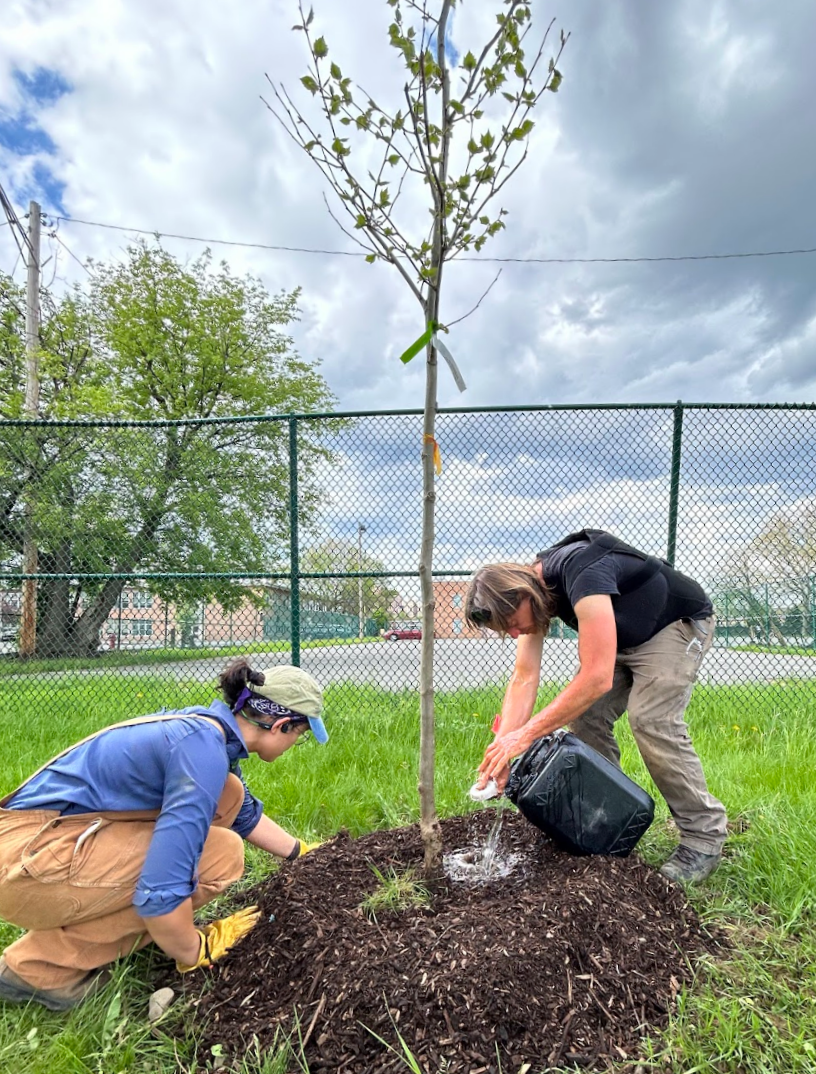
Radix is built on a formerly vacant asphalt lot. There’s plenty of these lots around Albany and in urban areas all over the world, and they contribute to the heat island effect. We collectively need to figure out how to make our cities cooler, and our solution is taking these nonporous, underutilized areas and turning them into green spaces. The most basic part of that is planting trees where we can, as they immediately provide shade, air purification, and food production. Radix runs a street-tree planting operation to help try to add back trees to combat these effects in already disproportionately underserved areas.
Free Trees for Albany
If you are a homeowner, resident, or business owner in Albany’s South End, Arbor Hill, West Hill, North Albany or Sheridan Hollow neighborhoods with green space that borders a sidewalk, we would love to work with you to plant a tree on your property at no cost to you.
As part of the Albany Biocultural Diversity Forest program, the Radix Center, in partnership with University at Albany’s Institute for Transformational and Ecosystem-based Climate Adaptation (ITECA), is now able to plant trees at no cost for residents on private property that has frontage along public sidewalks. (Any tree must be planted on privately-owned property adjacent to public sidewalks, but not directly on city-owned property along sidewalks).
Street trees provide shade for pedestrians and make our communities cooler during our hottest days, reducing summer air temperatures by as much as 10 degrees or more. Trees also purify the air we breathe by removing many of the pollutants that cause asthma and other respiratory diseases. Trees also provide good habitat for birds and add beauty to our lives.
Here is how it works: contact us and we will follow up with a site visit to make sure the conditions are right for tree planting. If you are not a property owner, we can work with you to secure the property owner’s permission. We will ask you to sign a simple agreement promising to keep the tree watered for its first season of growth to ensure the tree survives and thrives.