
Atmospheric Justice Initiatives
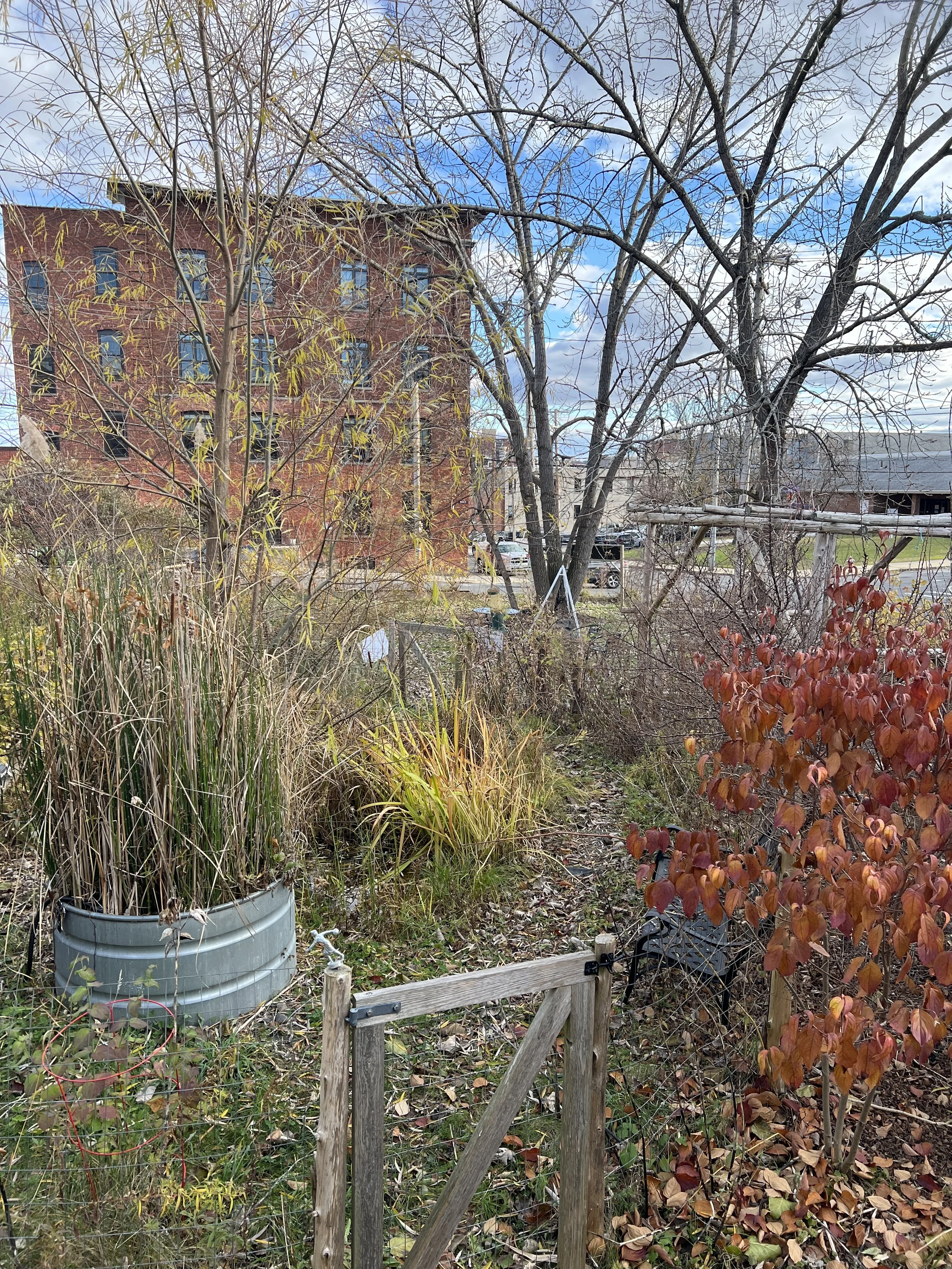
As part of our AtmoJustice: Youth-Engaged Air Quality Monitoring in Environmental Justice Communities program, Radix has deployed community air monitors throughout the South End neighborhood. The program is run in conjunction with Radix’s high school youth employment program (the EcoJustice Associates) and as a research collaboration with the City of Albany’s Office of Sustainability to monitor Urban Heat Islands and the Impacts of Tree Cover.
Why?
The South End of Albany was designated a potential environmental justice area by DEC in 2003. The neighborhood is also identified as a disadvantaged community by the draft criteria proposed by the NYS Climate Justice Working Group. Home to roughly 8300 residents, the South End is a majority Black, historically redlined neighborhood with a $27,750 median household income (2019 American Communities Survey). 32% of households live below the poverty line.
The southern tip of Albany is an industrial area that includes the Port of Albany, state highway Route 32, and interstate highways I787 and I87. In response to community concerns, the DEC conducted extensive air quality monitoring at Ezra Prentice Homes, a public housing complex located on the southern border of the neighborhood. The study observed elevated levels of TRAPs along Route 32 at Ezra Prentice and elevated levels of benzene at the Albany County Health Department’s monitor, located next to the neighborhood’s public elementary school.
In addition to air pollutants, the neighborhood qualifies as a food desert by USDA criteria due to the absence of grocery stores and transportation opportunities. While a legacy of redlining has resulted in general disinvestment, it can also be seen in decreased tree cover and greenspace compared to more affluent neighborhoods, which result in elevated temperatures.
As an educational organization focused on environmental justice, we feel it is part of our purpose to engage in this type of work, educate participants in our programs, and report back to the local community.
This program is run in conjunction with our Urban Heat Island and Impact of Tree Cover research project.